

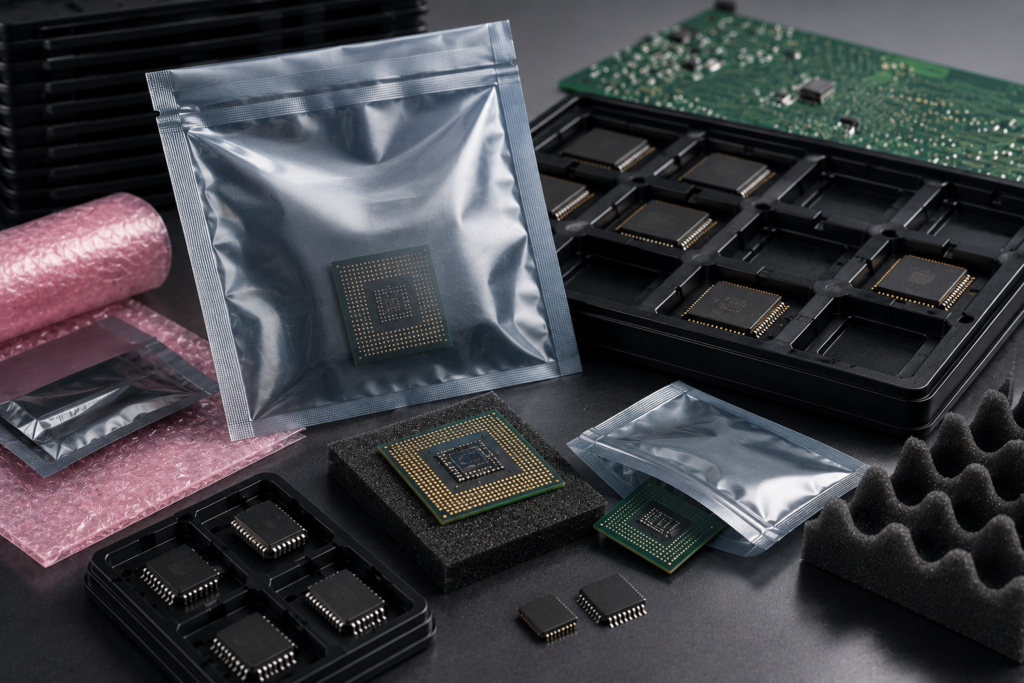
ESD-Safe Packaging for Semiconductor and Chip Manufacturers
A chip doesn’t have to be dropped to get damaged. Sometimes, it just takes someone picking it up incorrectly or using a bag that cannot manage static electricity. That one moment can turn a good component into scrap. Unfortunately, manufacturers often realize this too late, after the chip has failed in the field.
This is why ESD-safe packaging is so important. For anyone working with semiconductors, it isn’t an optional extra. It is essential for ensuring that the product reaches the customer in good condition.
What Is ESD-Safe Packaging
ESD-safe packaging is designed to manage static electricity around sensitive electronic components. It either prevents static from building up or safely discharges it before it can reach the component inside. This is crucial for semiconductors. Even a small static charge that you wouldn’t feel or notice can damage a chip’s internal circuitry.
Why Chip Packaging Needs Extra Care
Chips differ from most electronic parts. Their circuitry is packed into a small space, and it operates at very low voltage. A static discharge that may not affect a larger component can seriously damage or weaken a chip. Sometimes the damage is immediate, but other times the chip might work initially, only to fail later when it is already inside a product. This kind of failure is costly to trace back and even harder to explain to a customer.
This is why chip packaging needs special treatment compared to general electronics. It requires materials made for this level of sensitivity, not something taken from standard shipping processes.
What Goes Into ESD-Safe Packaging for Semiconductors
There isn’t a single material that fits every situation. Most semiconductor packaging setups use a mix, depending on the component and its journey through the supply chain.
ESD shielding bags typically serve as the first layer. These bags create a barrier around the chip and stop external static from getting through.
Moisture barrier bags often accompany them, especially for components sensitive to both humidity and static. Chips absorb moisture more easily than people think, and that moisture can cause issues during processes like reflow soldering.
Conductive trays are used for handling and short-term storage, particularly as components move between stages inside a facility.
ESD-safe foam provides physical protection while maintaining static control. Regular foam does the opposite, making this distinction important.
Each of these elements serves a different purpose, and the right combination is what provides complete protection for the component, not just one part of it.
Where Semiconductor Packaging Differs From General Anti-Static Packaging
Many people use ESD-safe packaging and anti-static packaging interchangeably. This is fine for general electronics but not for semiconductor packaging, which often requires a higher level of care.
Chips tend to be more sensitive to moisture, so packaging must control both humidity and static. Many semiconductor components come with moisture sensitivity ratings that specify how they should be stored and handled before use. Ignoring these ratings is a common way for components to get damaged before assembly.
The margin for error is also smaller. A slightly weaker anti-static bag might work for a basic circuit board; it rarely works for a chip.
What Happens Without Proper ESD-Safe Packaging
The challenge with static damage is that it often goes unnoticed. A chip can appear perfectly fine after a static event but still have a hidden defect. That defect might not lead to a failure until the product is already in use by a customer.
At that point, the costs multiply. It’s not just the chip. There are warranty claims, investigations, a damaged relationship with the customer, and often a frantic search to find where the damage occurred in the supply chain. Most of the time, it goes back to a packaging gap that could have been prevented.
How Prime Epaq Supports Electronics and Semiconductor Manufacturers
We partner with manufacturers across electronics and switchgear who need packaging that effectively meets the sensitivity of their components, not just packaging that looks the part. From material selection to the way components are packed for transit, we tailor our approach to what the product needs, avoiding a one-size-fits-all solution. If you’re shipping semiconductors, chips, or other static-sensitive components and want packaging designed for that level of protection, our team can help you find the right fit.
FAQs
What is ESD-safe packaging?
It is packaging designed to prevent static electricity from damaging sensitive electronic components by either blocking it or safely discharging it.
Is ESD-safe packaging the same as anti-static packaging?
They overlap, but semiconductor packaging usually requires extra protection, especially related to moisture sensitivity, which basic anti-static packaging doesn’t always provide.
What packaging is used for chips and semiconductors?
A combination of ESD shielding bags, moisture barrier bags, conductive trays, and ESD-safe foam, selected based on the component and its movement through the supply chain.