

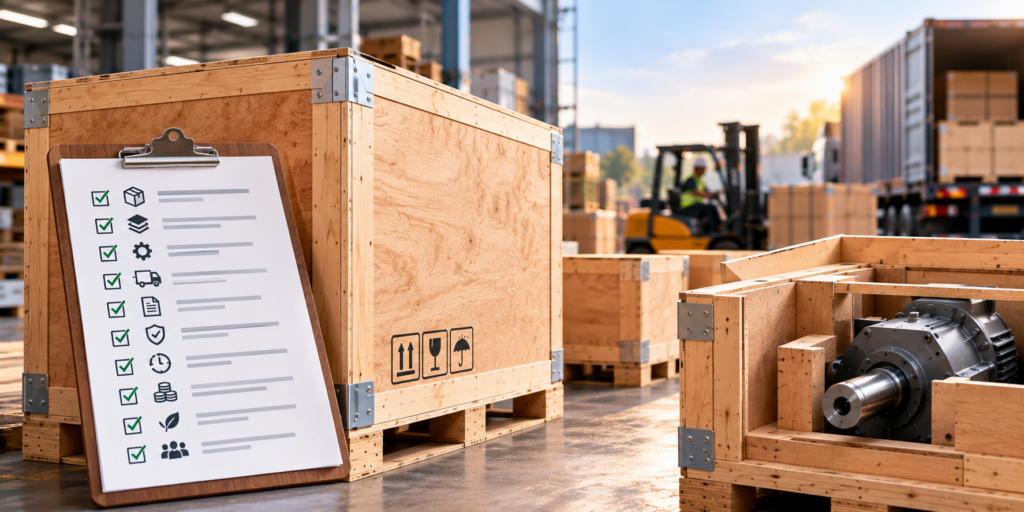
Plywood Packaging Checklist for Procurement Managers
A damaged shipment costs a lot more than the crate it travelled in. You pay for replacement parts, late deliveries, and the awkward call with the customer. If you buy packaging for heavy, high-value, or export-bound goods, plywood packaging solutions are worth a serious look. They’re strong, lighter than steel, and easy to customize. Here’s a practical checklist to run through before you place your next order.
Why Plywood Is a Smart Choice for Packaging
Plywood is strong for its weight, and it’s easy to cut to the exact size of your product. That means less wasted material, lower freight weight, and more boxes in each container. Plywood crates are also easier to open than steel-and-wood crates, so the receiving team spends less time and effort unpacking. Buyers in automotive, solar, and heavy machinery tend to see these gains quickly.
Your Plywood Packaging Checklist
1. Know your product’s load.
Write down the weight, dimensions, center of gravity, and any fragile or protruding parts. Also note how it will be lifted: by forklift, crane, or by hand. A supplier can’t design a good box without these details.
2. Ask about grade and thickness.
Plywood isn’t one standard material. Ask which grade, thickness, and glue type the supplier plans to use and why. Heavy loads need thicker panels and stronger joints. Lighter products can go in thinner plywood, which saves money and weight.
3. Look at the design, not just the box.
Check for skids, internal bracing, forklift entry points, crane lifting points, and how many crates can be stacked. Ask to see a drawing before production starts.
4. Think about how it will travel.
Road, sea, and air all treat packaging differently. Sea freight brings humidity, so if you’re shipping metal parts, ask about moisture barriers, VCI film, or desiccants.
5. Check export rules early.
Plywood is a manufactured wood product, so it’s generally treated differently from solid wood under ISPM-15. But solid-wood skids or battens in the same crate may still need heat treatment and marking. Confirm the rules for your destination country before you ship.
6. Ask how the design is tested.
A good plywood box supplier can tell you how a design was validated, whether through load tests, drop tests, or past jobs with similar products. Ask what quality checks happen before dispatch.
7. Check lead time and capacity.
Can they handle custom sizes, repeat orders, and rush jobs? Ask about turnaround time and whether they offer on-site packing for big or complicated consignments.
8. Compare total cost.
The lowest quote is rarely the cheapest option. Count the freight savings from lighter crates, fewer damage claims, handling time, and disposal. A slightly higher price per box can still cost less per shipment.
9. Ask about sustainability.
Many companies now have sustainability targets. Ask where the wood comes from, whether the design uses only the material it needs, and whether the receiver can reuse, recycle, or dispose of the crate easily.
10. Get samples and references.
Before a big order, ask for a sample or a trial shipment. Ask for references from customers in your industry too. Real examples tell you more than a brochure does.
Ready to Choose Your Packaging Partner?
Engineered plywood packaging solutions protect your product, cut logistics costs, and make life easier for the people receiving it. Run your suppliers through this checklist, and you’ll compare them on facts instead of price alone. That’s how you avoid unpleasant surprises in transit.
Looking for a plywood packaging partner? Talk to the Prime Epaq team about custom plywood boxes built around your product, your route, and your budget. Request a quote today.