

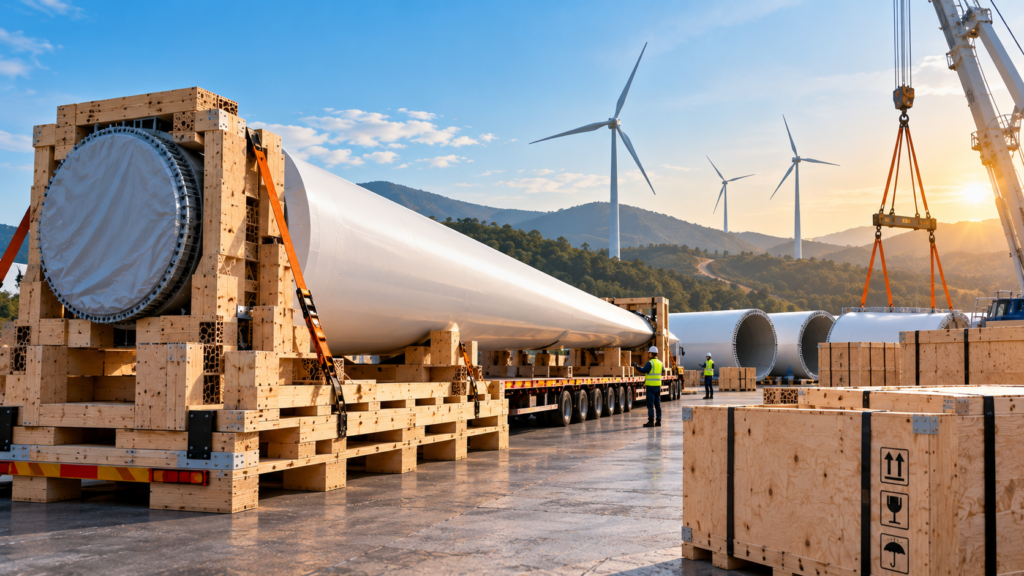
Why Wind Turbine Component Packaging Needs Specialized Industrial Packaging
Wind energy projects run on tight schedules. Every blade, gearbox, and tower section has to reach the site in good condition and on time. If even one part arrives damaged, the whole installation can be held up for weeks. That is why you can’t handle wind turbine component packaging with regular boxes and pallets.
Let’s look at why these parts are so hard to pack, what goes wrong with standard packaging, and what a better approach looks like.
What Makes Wind Turbine Components Hard to Pack
Most industrial goods come in shapes that are easy to box up. Wind turbine parts are different.
- Size: Blades can be more than 50 meters long. Tower sections and hubs are wide, heavy, and awkward to lift.
- Weight: A single nacelle or generator can weigh several tonnes, and the weight is rarely spread evenly.
- Sensitive parts: Gearboxes, bearings, sensors, and control panels can be damaged by small shocks, moisture, or dust.
- High cost: These components are expensive and often take months to replace
On top of this, most parts travel a long way. They may go by road, rail, and sea before reaching the wind farm, and each handover adds risk.
What Goes Wrong With Standard Packaging
Regular packaging is made for regular cargo. When it is used for wind energy parts, the problems show up quickly.
Transit damage. Trucks vibrate, ships roll, and cranes swing. Without proper bracing, heavy parts shift inside their packaging and get scratched, dented, or cracked.
Rust and moisture. Sea freight exposes metal parts to salty, humid air. Bare steel, bearings, and gears can start rusting long before they are installed. Storage at a port or site can make it worse.
Weak crates. A crate that is not built for the load can bend, split, or collapse when stacked or lifted. That puts both the part and the people handling it at risk.
Delays and extra cost. Damaged parts mean inspection, repair or replacement, plus insurance claims and rescheduled installation. The packaging you saved money on ends up costing far more.
Types of Specialized Packaging for Wind Energy Components
Good packaging for this industry is designed around the part, not the other way around. Here are the main options used.
Custom wooden crates and heavy-duty boxes. Built to the exact size and weight of the component, with strong frames and lift points. These work well for gearboxes, generators, hubs, and electrical parts.
Reinforced pallets and skids. Wind components need pallets that can carry very heavy, uneven loads. For export, wooden pallets and crates should follow ISPM-15 rules, which means the wood is treated and marked so it clears customs without trouble.
Supports and cradles. Long parts like blades and tower sections need shaped supports that hold them in place and spread the load so they do not bend or get pressure marks.
VCI and moisture protection. VCI (vapor corrosion inhibitor) film and paper protect metal parts from rust. Combined with moisture barrier bags and desiccants, they keep parts dry during long sea journeys and storage.
Cushioning and internal bracing. Foam, wooden blocks, and straps hold the part firmly so it cannot move, even if the crate is knocked or tilted.
How Onsite Packaging Helps Wind Energy Projects
One of the most practical ways to reduce risk is to pack the components where they are made. This is called onsite packaging, and it makes a lot of sense for wind turbine parts.
Here is how it helps:
- Less handling. Heavy parts are often moved to a separate packing facility, which means extra lifting and extra chances for damage. With onsite packaging, the crate is built, and the part is packed right at the manufacturing unit.
- Better fit. The packaging team can measure the actual component and design the crate around it, rather than working from drawings alone.
- Faster dispatch. Packing and loading happen in one place, so the part can leave the plant sooner and stay on schedule.
- Easier for oversized parts. Some components are simply too big or too heavy to move twice. Packing them where they sit is the safest option.
- Quality control. Your team can see how the part is being packed and check that it meets your requirements before it ships.
For manufacturers with tight delivery dates, onsite packaging removes one of the biggest sources of delay and damage.
What to Look for in a Packaging Partner
If you are choosing someone to handle wind energy packaging solutions, ask a few simple questions.
- Do they design packaging for each component, or do they offer only standard sizes?
- Can they handle heavy and oversized parts?
- Do they follow export standards like ISPM-15?
- Can they work at your plant if needed?
- Do they have experience with heavy engineering or energy cargo?
A partner who can answer yes to these will save you time, money, and a lot of stress.
Frequently Asked Questions
1. What type of packaging is used for wind turbine components?
It depends on the part. Gearboxes, generators, and hubs usually go in custom wooden crates with internal bracing. Blades and tower sections need shaped supports and cradles. Metal parts also get rust protection like VCI film and moisture barrier bags, especially for sea freight.
2. Why can’t standard boxes and pallets be used for wind turbine parts?
Standard packaging is made for lighter, smaller, and more regular loads. Wind turbine parts are heavy, oversized, and often uneven in shape. Regular boxes and pallets can bend, crack, or collapse under that weight, and they do not protect metal parts from moisture and rust.
3. What is ISPM-15, and why does it matter for wind energy shipments?
ISPM-15 is an international standard for wooden packaging used in export. The wood is heat-treated and stamped to show it is free from pests. Without this mark, crates and pallets can be held at customs or even rejected, which delays the whole shipment.
4. How do you protect wind turbine components from rust during sea freight?
Sea air is humid and salty, so metal parts need extra care. VCI film or paper, moisture barrier bags, and desiccants are commonly used together. The part is sealed properly before it goes into the crate, so it stays dry through shipping and storage.
5. What is onsite packaging, and how does it help?
Onsite packaging means the packing is done at your manufacturing unit instead of moving the part to another facility. It cuts down on handling, gives a better fit because the crate is built around the actual part, and helps parts leave the plant faster. It is especially useful for very large or heavy components.
6. Can packaging be customized for oversized wind turbine parts?
Yes. For oversized or unusual parts, the packaging is designed based on the exact size, weight, and lifting points of the component. This gives better protection than trying to fit the part into a standard size.
Protect Your Wind Energy Investment From Factory to Site
Wind turbine components are too large, too heavy, and too valuable to be packed like ordinary cargo. Standard packaging leads to damage, rust, and delays. Specialized industrial packaging, built around each part and backed by on-site support, protects your investment and keeps projects moving.
At Prime Epaq, we design custom industrial packaging for heavy and oversized cargo, including on-site packaging at your facility and export-ready solutions. If you are shipping wind turbine components and want packaging that fits the job, talk to our team about your requirements.