

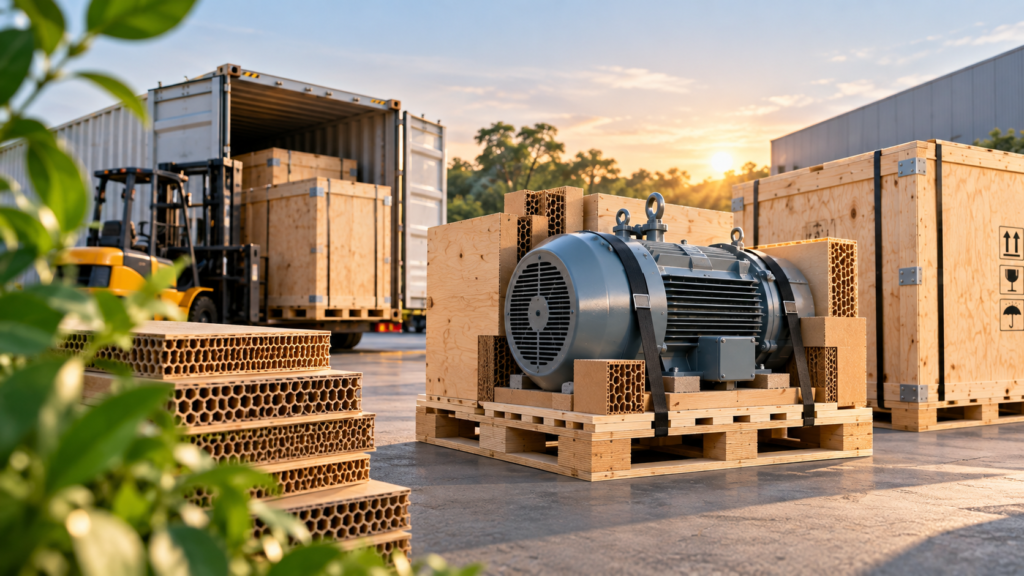
Sustainable Packaging Design for Heavy Industrial Goods
Industrial supply chains often treat packaging as an afterthought. A crate is a crate, a pallet is a pallet, and engineers focus elsewhere. But for anyone shipping heavy machinery, solar equipment, or automotive parts across states or borders, packaging design is quietly one of the biggest levers for cost, safety, and environmental impact.
Why packaging design deserves more attention
Heavy industrial goods are expensive to move and even more expensive to replace if damaged in transit. That’s where sustainable packaging design comes in. It’s not just about using recycled material or slapping an eco-friendly label on a box. It’s about rethinking how a crate, pallet, or container is built from the ground up so it protects the product, uses less material, and can often be reused.
A well-designed wooden crate for a piece of heavy machinery might look simple from the outside, but the choices behind it, wall thickness, bracing, moisture barriers, cushioning, all affect how much material gets used and how well the goods survive a long haul.
Reducing material without cutting corners on protection
One of the biggest myths in industrial packaging is that sustainable design means weaker packaging. Often, it’s the opposite. Engineers who understand load distribution and vibration patterns can design crates that use less wood while still protecting the product. Removing unnecessary bulk, tightening tolerances, and using the right grade of plywood instead of over-engineering with solid wood can cut material use by a meaningful margin.
This matters even more when you’re shipping something in the 800 kg to several-ton range. At that scale, small design inefficiencies multiply fast. A crate that’s slightly oversized or overbuilt adds unnecessary weight, which drives up freight costs and fuel consumption across the supply chain.
Reuse and circularity in industrial packaging
Unlike consumer packaging, industrial crates and pallets often have a second life. A returnable crate designed for durability can make several round trips before it needs replacing. This is a practical form of circularity that doesn’t require fancy materials, just smarter design decisions upfront.
Manufacturers exporting heavy goods repeatedly to the same destinations, think automotive parts suppliers or solar equipment exporters, stand to gain the most from returnable packaging systems. The upfront cost is higher, but the long-term savings in material and waste reduction add up quickly.
Compliance and sustainability go hand in hand
For anyone exporting wooden packaging internationally, ISPM-15 compliance isn’t optional. But compliance and sustainability aren’t separate concerns. Using treated wood correctly, sourcing responsibly, and designing packaging that meets both safety standards and environmental goals is entirely possible with the right engineering approach.
What this means for manufacturers
If you’re responsible for packaging heavy industrial goods, the questions worth asking aren’t just “Does this protect the product?” but also “Does this use the least material necessary?” and “Can this be reused?” Those two questions, asked consistently, are what separate sustainable packaging design from packaging that just claims to be.
Getting this right takes engineering expertise, not guesswork. The right packaging partner will look at your product specifications, shipping routes, and handling conditions before recommending a design, not after.
In conclusion, sustainable packaging design isn’t a trend for heavy industrial goods; it’s becoming a practical necessity as costs rise and regulations tighten. Manufacturers who invest in smarter crate and pallet design now will see the benefits in lower freight costs, fewer damaged shipments, and a smaller environmental footprint over time.
To see more insights on industrial packaging, follow us on LinkedIn.