

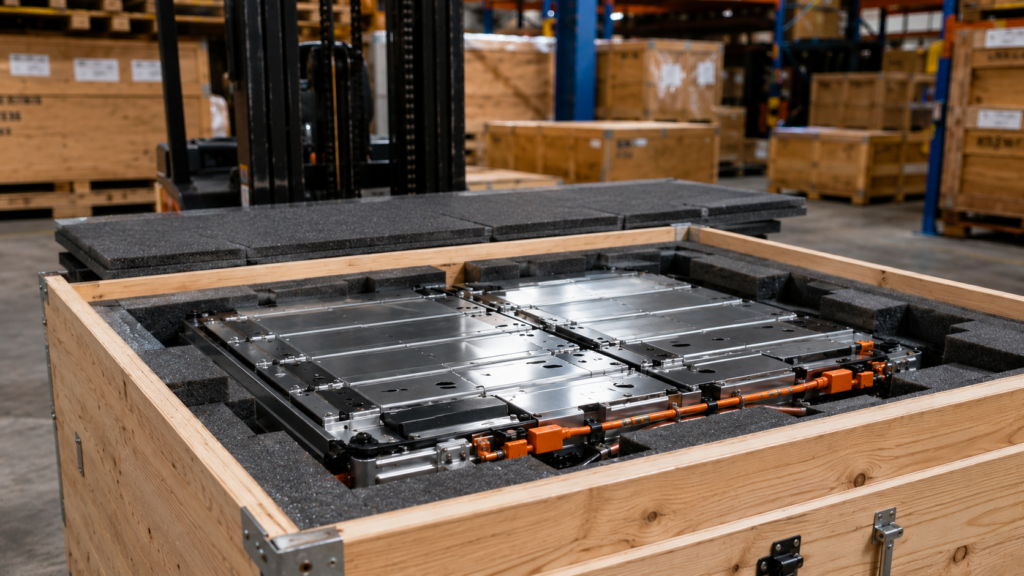
Lithium Ion Battery Packaging Solutions for Electric Vehicle Manufacturers
Electric vehicles are everywhere now. Battery production is ramping up globally, supply chains are getting messier, and shipping networks are working overtime just to keep up. How do you actually get expensive battery systems safely from the factory floor to assembly plants without breaking them or running into legal headaches?
Lithium ion battery packaging isn’t just another logistics task. It’s what keeps your batteries safe during shipping, protects your workers, keeps regulators happy, and maintains your supply chain operations.
Why Lithium Ion Battery Packaging Is Essential for EV Manufacturers
Most people think packaging is just about putting stuff in a box. But that’s not how it works in battery logistics. Lithium-ion batteries are sensitive products that need careful handling. They can get damaged from impact during loading and unloading. Vibration from long-distance transport wears them down. Moisture enters if there’s no barrier protection. Temperature swings affect battery chemistry. And in rare cases, a damaged cell can cause thermal issues if it’s been bent or crushed during handling.
But there’s more to it than just keeping batteries intact. Good packaging protects your bottom line in three ways. First, it stops your high-value batteries from arriving damaged, which means no costly recalls, no rework delays, and no unhappy assembly plant managers waiting for replacements. Second, it keeps your workers safe by containing dangerous materials properly and preventing accidents during loading, unloading, and storage. Third, it keeps you out of legal trouble because you’re meeting transportation regulations. Penalties, fines, and rejected shipments cost money. Proper packaging prevents all of that.
Key Challenges in Packaging Lithium Ion Batteries
Battery logistics involves solving complex problems every day. You’re dealing with a mix of different battery types and sizes, each with its own requirements.
Batteries come in different forms. You’ve got individual cells one day, modules the next, and complete 300-kilo battery packs after that. What works for protecting a single cell isn’t going to work for a massive module. You need different solutions for different products.
Weight is a significant challenge. Heavy battery modules need packaging that can support them without taking up excessive space or costing too much per unit. Make it too thin, and it fails. Make it too thick and you’re spending too much on materials for every shipment.
Transportation regulations are strict. Lithium-ion batteries are classified as dangerous goods. That means specific packaging requirements, labeling rules, and paperwork for every shipment. Get it wrong and your shipment gets held up at customs, you pay detention fees, or it gets sent back completely. Compliance isn’t optional.
Storage duration adds another layer. When batteries sit in warehouses waiting for the next leg of the journey, humidity and temperature swings start degrading the chemistry inside. Without proper moisture protection, your batteries show up to the assembly plant already damaged.
Cost pressure is constant. As EV production goes up, every amount spent on packaging per unit gets noticed by procurement teams. Everyone wants cheaper solutions. But the cheapest packaging option usually costs you way more in damaged batteries, regulatory headaches, and supply chain delays than you save on materials.
Engineering Packaging Systems for Safety, Performance, and Compliance
Good battery packaging isn’t one-size-fits-all. It’s custom-built to handle real transportation challenges.
The padding and cushioning matter a lot. Different batteries need different levels of shock protection. A small individual cell doesn’t need the same amount of cushioning as a large flat module. Smart packaging uses the right materials in the right spots to absorb impact without wasting space or money.
Fire protection is critical. While properly made batteries almost never catch fire during normal shipping, regulations require that your packaging can handle a thermal event if something goes really wrong. That’s why you see fire-resistant foams, mineral wool, and ceramic materials in battery packaging. They add safety without adding too much weight.
Keeping moisture out is essential. You can’t just throw a battery in a box and hope it stays dry. Professional packaging uses desiccant packs to pull humidity out of the air, vapor-barrier films to block moisture from getting in, and special breathable barriers that let air move but keep water out. The mix depends on what type of battery you’re shipping, how long it’ll sit in storage, and what the weather’s like where it’s going.
Testing is non-negotiable. Packaging gets tested thoroughly. Drop tests show what happens when someone fumbles during loading. Vibration tests mimic thousands of miles of transport. Temperature cycling tests make sure moisture barriers actually work when things heat up and cool down. Compression tests prove the structure can handle stacks of boxes. Only packaging that passes all these tests should ever move into production.
Compliance documentation matters. Compliance certificates, test reports, and regulatory documentation. This stuff is what lets your batteries clear customs and pass inspections without getting stuck at ports.
What’s Changing in Battery Packaging
Battery packaging is shifting in important ways. Sustainability expectations are going up. Major automakers are pushing their suppliers to cut down on packaging waste and use recyclable or biodegradable materials wherever possible. You can’t sacrifice protection just to be green. Modern materials work better now, and you can actually have both sustainability and protection.
Reusable packaging is starting to make sense. Instead of cardboard and foam that gets thrown away after one shipment, some manufacturers are investing in heavy-duty plastic bins and composite containers that do multiple trips before retiring. The upfront investment is higher, but when you use the same bin dozens of times, the cost per shipment drops fast.
Real-time tracking is becoming standard. Putting temperature and humidity sensors inside your packaging means you can actually see what conditions your batteries are experiencing during shipment. When you do this across thousands of shipments, you start spotting patterns. You see which routes are toughest, which seasons cause the most moisture problems, and which packaging designs work best. That data helps you keep improving.
Battery recycling is creating a new challenge. End-of-life batteries going back for recycling need different handling than brand-new batteries shipped out. So packaging design now has to work both ways. You’re building systems that protect a battery on its way into production and also protect the environment when that battery eventually comes back at the end of its life.
Transforming EV Battery Transportation with Engineered Packaging Solutions
Battery packaging is no longer an afterthought. It’s become a real competitive advantage if you get it right. It keeps your expensive batteries from getting destroyed in transit. It keeps your workers safe. It keeps regulators off your back. It helps you hit your sustainability targets. And when you do it right, it actually cuts your total logistics costs.
You can either treat packaging like a cost you want to minimize or treat it like an investment in keeping your supply chain running smoothly. Every delayed shipment because of packaging damage, every customs hold-up over compliance issues, every worker accident that could’ve been prevented with proper packaging, all of that traces back to one root cause. The packaging wasn’t built for real-world conditions.
You need to work with people who actually understand battery shipping and transportation regulations and the problems you face in EV manufacturing. Prime Epaq builds packaging specifically for EV and battery logistics. We handle battery module protection, thermal barriers, anti-static packaging for sensitive electronics, and sustainable designs that actually meet global compliance standards.
FAQs
1. What is lithium ion battery packaging?
It’s a special packaging designed to protect expensive batteries while they travel from the factory to the assembly plant. Unlike regular cardboard boxes, it protects batteries from damage, moisture, and temperature changes and keeps them safe during handling and transport.
2. Why can’t we just use regular packaging for batteries?
Regular packaging isn’t strong enough. Batteries get damaged by bumps during loading, vibration from long drives, moisture that gets inside, and heat. Battery packaging requires specialized cushioning materials, moisture barriers, and fire protection that regular boxes don’t provide.
3. Do we need different packaging for different battery sizes?
Yes. A small battery cell needs less protection than a large battery module. Packaging should be custom-designed for the size and weight of your specific batteries to protect them properly without wasting materials.
4. Who checks if our packaging meets regulations?
Customs inspectors at ports, airports, and borders check packaging when shipments arrive. They look for proper labeling, correct materials, and documentation proving the packaging passed required tests. If everything isn’t correct, they can hold up your shipment and charge fees.
5. What’s the difference between cells, modules, and battery packs?
A cell is a single unit, a module is several cells connected, and a battery pack is the complete system ready for a car. Each needs different protection levels. A single cell is small and light, but a battery pack weighs hundreds of kilos and needs much stronger packaging.